
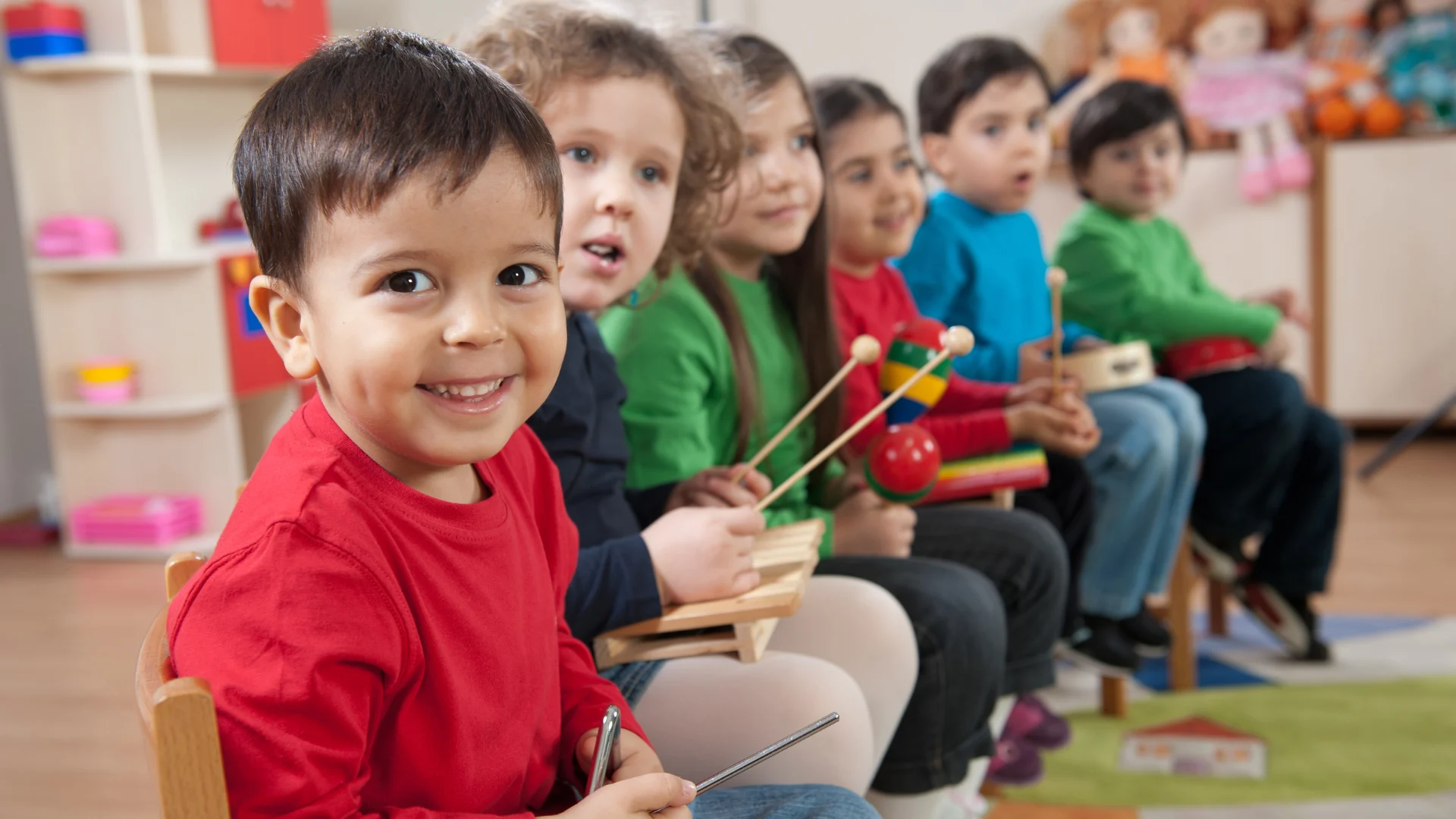
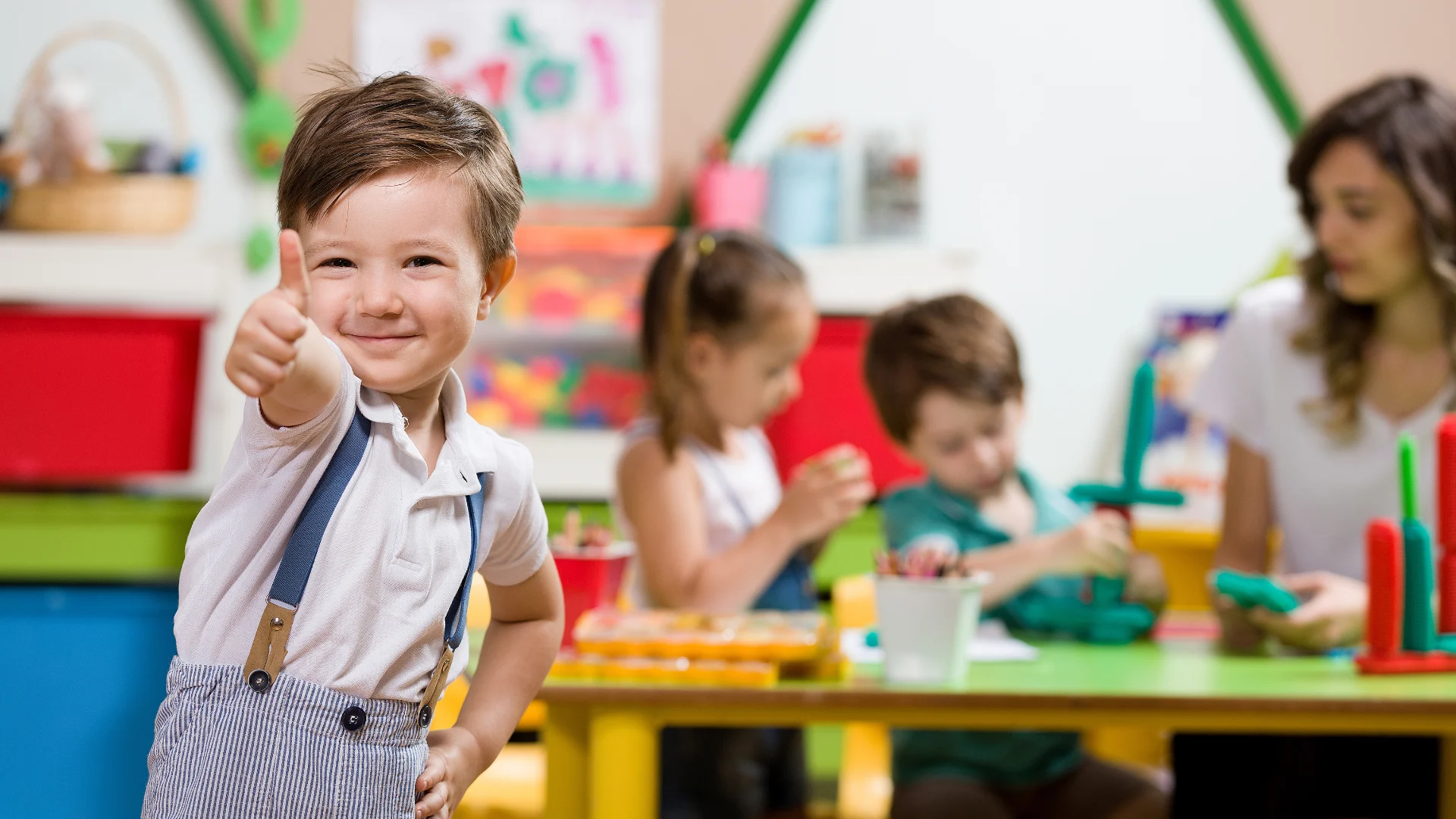
Tiny Hands Learning Pre School prepares children for kindergarten through structured play, early learning, and confidence building support.
What Is the Pre School Program
The Pre School program is a licensed early learning program designed for children preparing for kindergarten. It focuses on structured play, early academics, and social growth within a supportive and engaging classroom environment. Unlike simple daycare settings, the program introduces school readiness skills in age appropriate ways that match each child’s development. Children participate in guided group activities, hands on learning centres, and teacher supported exploration throughout the day. Educators observe progress closely and adjust support to build confidence and independence. Families who value strong early foundations often review our infant learning approach to the baby room program to understand how skills develop steadily from the earliest years into the preschool stage.
Age Group Served in Pre School
Pre School Age Range
Typically 3 to 5 Years
Kindergarten Readiness Focus
Structured and Supportive Setting
Pre School Age Group Coverage
Early Learners Preparing for School
Development First Approach
Warm and Engaging Environment
Pre School Eligibility
Before Kindergarten Transition
Independence and Skill Building
Safe, Nurturing Classroom
The Pre School room welcomes children ready for more structured learning while still benefiting from play based support. During this stage, cognitive, language, and social skills grow quickly. The classroom supports early academics, peer cooperation, self help skills, and confident group participation. Each child’s progress is observed closely so the transition to kindergarten happens smoothly, often following earlier programs like the junior toddler program.
What Children Learn in the Pre School Program
Parents often ask what preschool teaches. The curriculum supports whole child development through early literacy, basic math, problem solving, motor skills, social emotional growth, and creative expression. Educators introduce these skills through engaging, play based activities rather than pressure. Children learn best when they stay active, curious, and confidently involved each day.
Daily Routine in the Pre School Classroom
A predictable routine helps children feel confident and ready to learn. Each day balances structure with flexibility to support individual needs. Activities include welcome time, learning centres, outdoor play, meals, rest, group projects, and free exploration. Teachers guide transitions carefully so children stay engaged, comfortable, and focused throughout the day.
How Educators Support School Readiness
School readiness involves more than letters and numbers. It includes independence, listening skills, and emotional regulation. Educators help children follow instructions, express needs, work in groups, build attention span, and practice self care. Research shows children in quality preschool programs transition smoothly and later benefit from out of school care.
Safety and Classroom Environment
Safety remains a top priority in the Pre School room. The classroom includes child sized secure furniture, clearly defined learning areas, sanitized materials, and staff trained in first aid and CPR. Daily cleaning is maintained, and children are supervised during all activities. Families can review our health and safety practices for details.
Parent Communication and Progress Updates
Ongoing communication keeps parents involved in their child’s learning journey. Families receive updates on participation, milestones, social growth, behaviour, and achievements. This consistent feedback builds strong partnerships between educators and families while keeping parents informed and connected to their child’s preschool progress and enrichment options like school age activities.
Preparing Children for Kindergarten
One main goal of the Pre School program is preparing children for a confident transition into kindergarten. Educators gradually introduce structured group learning and independence. Children build readiness through routines, listening skills, peer cooperation, early academic confidence, and emotional regulation. This step by step approach helps reduce anxiety when entering formal school settings.
Faq’s
What age is the Pre School program for?
The program usually serves children between 3 and 5 years old who are preparing for kindergarten.
What skills do children learn in preschool?
Children build early literacy, basic math, social skills, problem solving abilities, and independence.
Is the Pre School program play based?
Yes. Learning is delivered through structured play, guided activities, and hands-on exploration.
How does preschool prepare my child for kindergarten?
Educators focus on routines, communication, group participation, and early academic confidence.
Is the classroom safe and supervised?
Yes. The environment follows strict Canadian childcare safety standards with trained staff and secure equipment.
Do parents receive progress updates?
Yes. Families receive regular communication about learning, behaviour, and milestones.
Will my child have outdoor play time?
Yes. Outdoor or active play is included daily when weather permits.
How big are the class sizes?
Group sizes are kept appropriate for strong supervision and personal attention.
What makes this preschool different from daycare?
It combines structured early learning, social development, and professional teaching in a licensed setting.
How can I register my child?
Parents can contact Tiny Hands Learning to check availability and begin enrollment.